Wilton carpet quality control: from finished product to documented checks
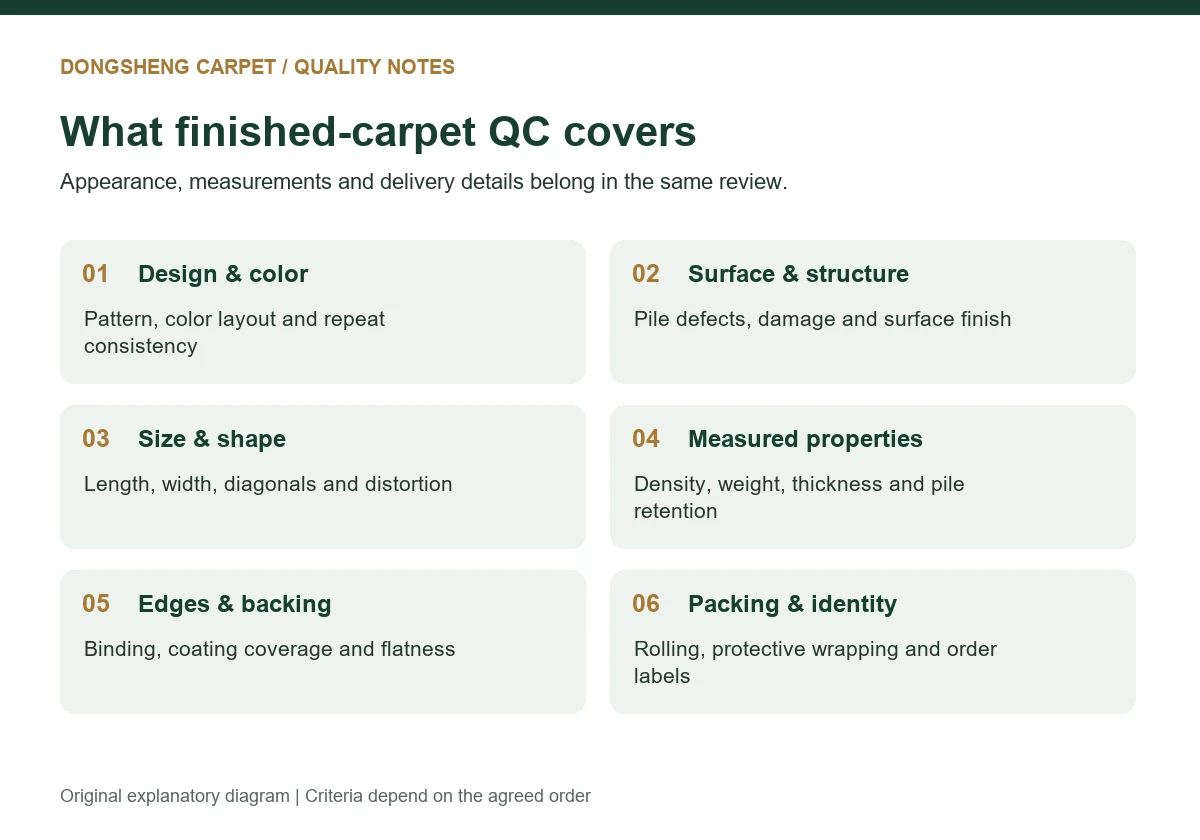
A finished Wilton carpet needs to do more than look attractive in a product photograph. Buyers need the correct design, a consistent pile surface, the agreed dimensions and construction, and packaging that identifies and protects the goods. Wilton carpet quality control brings those details together before the product reaches the customer.
At Dongsheng Carpet, the finished-product inspection documents cover both measured technical properties and close attention to appearance. Our technical inspection report records specified values alongside measured results. Our detailed finished-product criteria address details ranging from missing pile and pattern alignment to binding, backing, rolling and labels.
This guide explains what those checks cover, why they matter to buyers, and which additional tests a carpet factory should consider for a particular application. Acceptance limits should always follow the approved order, sample and applicable test requirements.
1. Confirm the design, color layout and woven pattern
Inspection begins with the intended product. A carpet can have an even surface and still be unsuitable if its pattern, color placement or dimensions differ from the approved reference. Dongsheng's finished-product criteria call for comparison with the design image and, where available, the sample carpet or reference board.
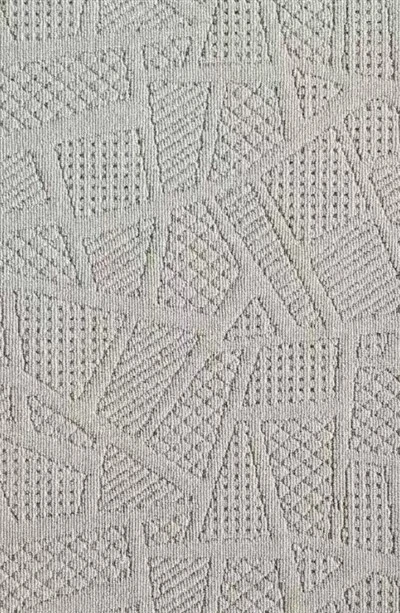
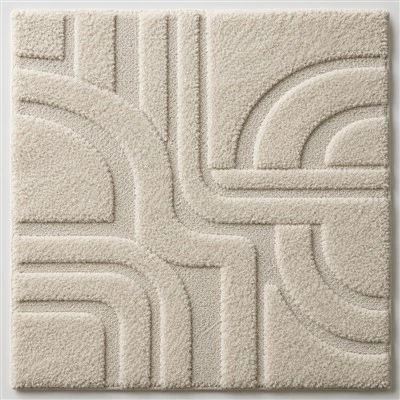
The review includes the overall motif, the regularity of pattern repeats and the way blended colors appear in the weave. Abstract designs deserve particular care: an unintended change can look plausible until it is compared directly with the reference. Inspectors also look for missing pile, missed lifts and unwanted lines within mixed-color areas.
For buyers, the useful preparation is a clearly identified design revision and an approved physical reference. A screen image helps communicate the design, but the agreed sample provides a more useful basis for discussing texture and shade. Record which reference takes priority if several versions exist.
2. Examine the carpet face, edges and backing
A careful carpet appearance inspection looks beyond the center of the design. The finished-product criteria list holes and damage, incorrect lifts, shade variation, visible repair marks, uneven pile, contamination, missing warp, sparse bands and missing pile groups. They also cover fuzzing, marks from finishing or shearing, small depressions and horizontal lines.
These are separate inspection points because a general impression of "good appearance" can overlook a localized problem. A buyer may first notice a repair in an open area, a line crossing a motif, or a pile-height difference under directional light. Recording the type and location makes a finding easier to discuss and resolve.
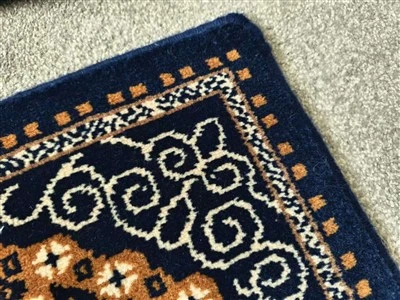
Edges and backing receive their own attention. The criteria address straight binding, loose thread ends, edge irregularities, missing coating, coating showing through, uneven coating and blistering. Absence of coating in a required area is different from an uneven coating appearance; identifying the actual condition supports a more precise assessment.
The finished-product criteria distinguish defects that must be absent from those that must not be obvious. That distinction should remain clear in the order's acceptance requirements. It would be misleading to convert every visual criterion into a promise of absolute visual perfection under all viewing conditions.
3. Measure dimensions, shape and edge finishing
Length and width need to match the production plan within the agreed tolerance. Dongsheng's finished-product criteria also include diagonal comparison and weft distortion. These checks help identify a rug that has the expected overall size but is out of square or shows a curved or skewed crosswise line.
The inspection method matters as much as the number. The criteria specify measuring tools for dimensions and pile height, rather than relying entirely on visual estimation. For an order, the measurement condition, the points measured and the treatment of the bound edge should be clear enough for both parties to interpret the result consistently.
Binding is checked as a finishing operation in its own right. The reference criteria include stitch density and straightness, together with design-dependent edge preparation. A neat perimeter should complement the agreed appearance rather than distract from it. Numerical tolerances and binding requirements belong to the particular order; customer-specific limits are not universal Wilton carpet standards.
4. Measure the technical properties behind the appearance
Technical checks recorded in Dongsheng's supplied inspection report
| Recorded item | What is reviewed | Why buyers should ask |
| Warp and weft density | Ends per metre and picks per metre against the specified construction | Does the woven construction match the order? |
| Dry and wet rubbing colorfastness | Separate grades for dry and wet rubbing | What evidence supports resistance to color transfer by rubbing? |
| Pile mass per unit area | Pile-yarn weight in g/m² | Is the specified pile content represented? |
| Total carpet mass per unit area | Complete carpet weight in g/m² | Is the full construction consistent with the specification? |
| Pile height | Pile height for the specified pile components | Does the pile profile match the intended surface? |
| Total thickness | Thickness of the complete carpet in mm | Has thickness been kept separate from pile height? |
| Pile pull-out force | Recorded force in newtons | What measured evidence addresses pile retention? |
| Weight deviations | Reported deviations against the applicable limits | Are specification and result compared explicitly? |
The report is evidence of the listed checks on the reported sample. It does not establish a universal specification, an inspection frequency or third-party certification.
Why these measurements must stay separate
Pile mass and total carpet mass describe different parts of the product. Backing contributes to total weight, so a total-weight figure alone cannot demonstrate how much pile yarn the carpet contains. Likewise, total thickness includes more than the pile height. Keeping the terms separate helps buyers compare quotations and inspection results on the same basis.
Rubbing colorfastness is also a defined property. A dry-rubbing result and a wet-rubbing result should be reported separately. Neither result, by itself, establishes resistance to sunlight, cleaning chemicals or every possible stain. Where those exposures matter, the buyer should specify the relevant additional evidence.
Pile retention deserves a measured record. The finished-product criteria include a practical scraping screen, while the technical report records pull-out force in newtons. A manual screen may help identify a concern, but it cannot be treated as an instrumented force measurement or used to calculate an equivalent force.
A practical example of specification versus result
Selected entries from a Dongsheng technical inspection report dated 12 October 2026
| Property | Specified in this report | Reported result |
| Warp density | 350 ends/m | 350 ends/m |
| Weft density | 450 picks/m | 450 picks/m |
| Pile mass | 700 g/m² | 727 g/m² |
| Total carpet mass | 2,100 g/m² | 2,102.5 g/m² |
| Total thickness | 11.5 mm | 11.6 mm |
| Rubbing colorfastness | Dry ≥3–4; wet ≥3 | Dry 4; wet 4 |
| Pile pull-out force | Order/report criteria apply | 18.01 N |
These are sample-specific records, not guaranteed values for every Dongsheng Wilton carpet. The report records a pass conclusion for the checks listed. Any project-specific laboratory requirements should be agreed separately.
5. Check cleanliness, odor, rolling and packaging
Finished-product quality continues into packing. The finished-product criteria include surface cleanliness, the visible effect of vacuuming and an odor check after backing treatment and drying. An odor observation can identify an unusual condition for further review; it is not a substitute for emissions or chemical testing.
The packing requirements are equally specific: orderly rolling, protective wrapping, labels at the roll ends and correct shipping marks. The reference also addresses rolling direction and conformity with the order's packing instructions. These details help keep the inspected carpet identifiable through storage, handling and delivery.
Before an order is packed, buyers should confirm what belongs on each label: for example, the agreed product or design reference, size and package identification. The exact fields depend on the order. Clear identification makes receiving checks more efficient and helps connect an issue back to the relevant production and inspection records.
6. What additional quality checks should a carpet factory plan?
Finished-product inspection forms one part of a broader quality plan. A factory should also establish incoming-material checks, production controls, an approved sample, a defined sampling approach and a process for handling nonconforming goods. These are recommended quality-management steps; these inspection documents alone do not verify every stage of Dongsheng's operating procedure.
For an order, agree which checks apply to every finished piece and which use representative specimens. Define the lot, selection method, test frequency and acceptance criteria before inspection. If a defect is found, a sound plan records the finding, separates affected goods, determines the correction and requires an appropriate recheck before release.
Additional laboratory work depends on the product and intended use. The following areas should be reviewed with the buyer and laboratory when building the project specification. They should not be assumed to have been completed simply because an appearance inspection has passed.

Additional testing areas to discuss for the application
Wear and appearance retention
Consider how the carpet will retain its texture and appearance under the expected use. The intended traffic and application should guide the evidence requested.
Dimensional stability
Review whether changes under moisture or temperature exposure need laboratory evaluation. Measuring a finished rug's dimensions answers a different question from testing dimensional change.
Color and cleaning exposure
Identify whether light, water or planned cleaning conditions require further colorfastness or performance evaluation beyond dry and wet rubbing.
Composition and relevant safety evidence
Confirm whether fiber-content verification, flammability, emissions or chemical testing is required for the destination and project. Request reports tied to the proposed product and applicable conditions.
Turn inspection records into a useful buyer review
A useful inspection record connects the product identity, the requirement and the result. Buyers should be able to see what was measured, the units, the specified limit and the conclusion. Where a named test standard is required, include its method and version, specimen identification and relevant test conditions. A numerical result without that context is harder to compare.
Dongsheng's technical inspection form includes fields for the date, order reference, design reference, inspection results, review and inspector. Those fields provide a structure for documenting the assessment. For a particular shipment, request the completed record and agree what supporting photographs or test reports are needed.
This approach makes quality assurance concrete. Design checks address whether the right carpet has been produced; measurements address whether the specified construction is represented; finishing and packaging checks address how the product is presented and identified. Together, the documented checks give buyers a clearer basis for acceptance and a more focused discussion when something needs attention.
Frequently asked questions
What does a finished Wilton carpet inspection include?
Dongsheng's inspection documents cover design and color layout, visible defects, dimensions and shape, edge finishing, backing appearance, technical measurements, cleanliness and packing. The final checklist and acceptance limits should follow the approved order.
Does a passed appearance inspection prove long-term performance?
Appearance inspection assesses the observed finished condition. Wear, dimensional stability, fire behavior and other performance requirements need the appropriate evidence for the intended product and application.
Are the example report values standard for every Wilton carpet?
No. They describe the reported sample. Pile mass, density, thickness, pile height and acceptance limits can differ between constructions and orders. Compare the report with the specification approved for your purchase.
What should I send Dongsheng before agreeing the inspection plan?
Share the application, design reference, sizes, construction requirements, intended market, packaging instructions and any required test methods or reports. Identify the sample and revision that will be used for approval.
Discuss your Wilton carpet quality requirements with Dongsheng
Share your approved design, target dimensions, intended application and inspection requirements with Dongsheng Carpet. Include any project-specific performance evidence and packing instructions so that the product specification and acceptance criteria can be discussed together. Clear requirements give both buyer and factory a practical basis for reviewing the finished carpet.